

STeLLA High School Biology Units
BSCS Science Learning developed the STeLLA® High School Biology Units in partnership with Jefferson County Public Schools in Louisville, Kentucky, from 2016 through 2021. This work extended BSCS’s research-based STeLLA professional learning approach to high school biology, building on evidence of its effectiveness in improving science teaching and student learning.
The units provide instructional materials that help students develop a deeper understanding of important biological concepts through three-dimensional science learning. Students explore Disciplinary Core Ideas (DCIs), engage in Science and Engineering Practices (SEPs), and apply Crosscutting Concepts (CCCs) to investigate phenomena, analyze evidence, develop models, and construct scientific explanations. Together, these dimensions help students connect biological processes across different scales and explain how living systems work.
The three units focus on natural selection, matter and energy in biological systems, and genetics. Each unit emphasizes a central biological idea while engaging students in science practices and helping them recognize patterns, relationships, and mechanisms that explain the natural world. Explore the units below to learn more and access the available instructional materials.
Natural Selection
A Study of Changes in Populations
Unit Central Question: How do populations change over time, and why do some traits become more common than others?
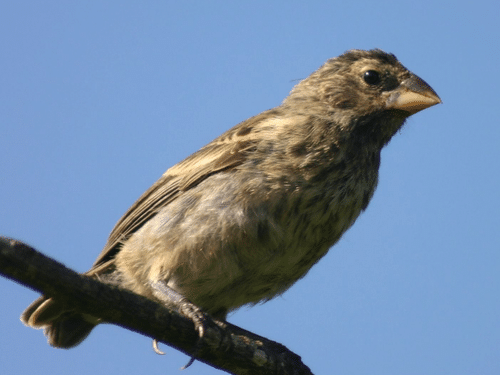
In this unit, students explore how natural selection drives changes in populations over generations. They investigate how inherited variations among individuals, competition for limited resources, and differences in survival and reproduction contribute to evolutionary change.
Students engage in SEPs by analyzing and interpreting data, developing and using models to investigate the factors that influence natural selection, and constructing explanations and engaging in argument from evidence. They examine patterns in population data and evaluate competing explanations to determine how inherited traits and environmental conditions contribute to changes across generations.
The unit emphasizes the crosscutting concept of cause and effect. Students investigate how interactions among inherited variation, environmental conditions, competition, survival, and reproduction can cause changes in populations over time. By distinguishing evidence of causal relationships from patterns that may simply be correlated, students develop evidence-based explanations for natural selection and then engage in argument from evidence as they compare two claims about the cause of changes within a population.
Explore the unit and access instructional materials:
Learn more about the Natural Selection Unit
Matter and Energy
A Study of Matter and Energy in a System
Unit Central Question: How do matter and energy move through living systems, and what keeps those systems functioning?
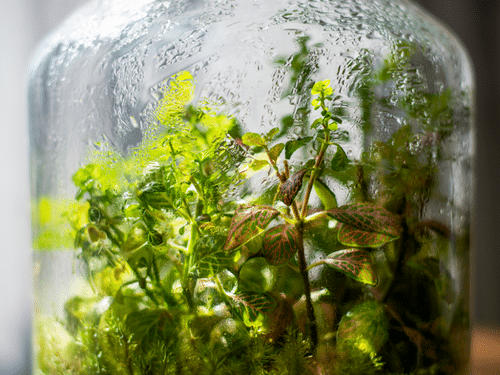
In this unit, students investigate how matter and energy behave differently within biological systems. Using models of biological systems, they explore how matter is conserved and cycles among living and nonliving components, while energy is transferred and transformed as it flows through organisms and ecosystems. They examine how photosynthesis and cellular respiration contribute to these processes and how organisms incorporate carbon into organic molecules.
Students engage in SEPs by developing and using models, constructing and revising explanations based on evidence, and using mathematical representations to support explanations about the cycling of matter and flow of energy. They investigate how matter and energy move among organisms and environmental components, how energy is transferred between trophic levels, and how biological processes transform energy from one form to another.
The unit highlights three CCCs: Energy and Matter, Systems and System Models, and Stability and Change. Students use the principle of conservation of matter to trace how atoms move through biological systems, while examining how energy enters, moves through, and leaves those systems. By modeling relationships among system components, they investigate how changes in one component can affect other components and influence the behavior of the system as a whole.
Through these connected ideas and practices, students develop a systems-level understanding of how matter cycles, energy flows, and biological processes sustain living systems.
Explore the unit and access instructional materials:
Learn more about the Matter and Energy Unit
Genetics
A Study of Traits
Unit Central Question: How are traits passed from parents to offspring, and what causes differences among individuals?
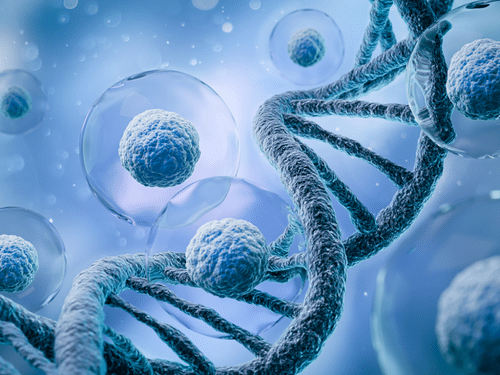
In this unit, students explore the relationship between DNA, proteins, inheritance, and variation in plants and animals. They investigate how the genetic information inherited from parents contributes to similarities and differences among individuals within a species.
They also examine how DNA contains instructions for making proteins, how proteins contribute to the characteristics and functions of organisms, and how processes such as meiosis, recombination, and mutation contribute to genetic variation.
Students engage in SEPs by asking questions about the relationships among DNA, chromosomes, proteins, and inherited traits; developing and using models to represent genetic processes; and constructing explanations and defending claims based on evidence. These practices help students connect molecular-level processes to the observable characteristics of individual organisms and patterns of variation within a species.
The unit emphasizes two CCCs: Structure and Function and Cause and Effect. Students explore how the structure of DNA relates to its role in storing genetic information and directing protein production. They also investigate how genetic processes, including the inheritance and recombination of genetic information and changes in DNA, can cause similarities and differences among individuals.
By connecting these concepts with scientific models and evidence-based explanations, students develop an understanding of how genetic information influences traits, how traits are inherited, and why individuals within a population are not identical.
Explore the unit and access instructional materials:
Learn more about the Genetics Unit
This material is based upon work supported, in part, by the National Science Foundation under Grant DRL-1503280. Any opinions, findings, and conclusions or recommendations expressed in this material are those of the author(s) and do not necessarily reflect the views of the National Science Foundation.
Interested?
These three units offer opportunities for students to investigate foundational biology concepts, develop scientific explanations, and build connections across biological systems.
Visit the STeLLA High School Biology Units website to explore the available lessons, videos, and supporting resources.