At a Glance
Featured Schools: Cottage Grove High School (Eugene, Oregon) and Clarke Central High School (Athens, GA)
Cohort Size: Part of 25-teacher cohort reaching 2,062 students across 17 states
Key partners: Oregon Public Broadcasting, National Oceanic Atmospheric Administration
Solutions:
- Climate Education Pathways high school curriculum designed for NGSS and developed from the ground up by teachers to adapt to their local context
- 60 hours of BSCS-led professional learning using the Anchored Inquiry Learning instructional model to build teachers’ capacity for curriculum adaptation and localization
- Research study examining impacts on teacher knowledge, confidence, and student learning and agency outcomes
Results:
- 11% gain in climate science understanding for students in localized classr
- 5% gain in student readiness to use climate science beyond the classroom
- Significant increases in teacher knowledge and confidence
What Teachers Were Facing
-
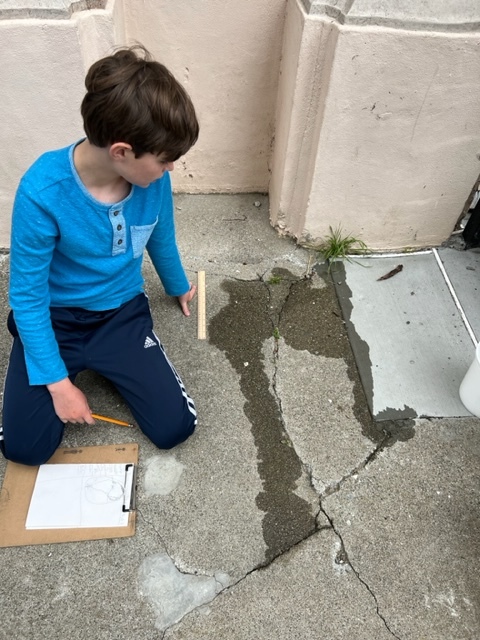
 Students felt disconnected from climate science. Lessons presented climate change as a distant, global problem, making it hard for students to see how it affects their own communities or what actions they could take.
 -
Teachers lacked curriculum designed for local adaptation. Existing materials weren’t built for customization, and creating place-based lessons from scratch required time and resources most teachers don’t have.
-
Teachers needed professional learning support. Without guidance on how to connect rigorous climate science to local phenomena, teachers struggled to make the content feel relevant to their students’ lives.
In (and Out) of the Classroom
“We’re the peach state! We used to make a ton of peaches. But production has gone down. Why?”
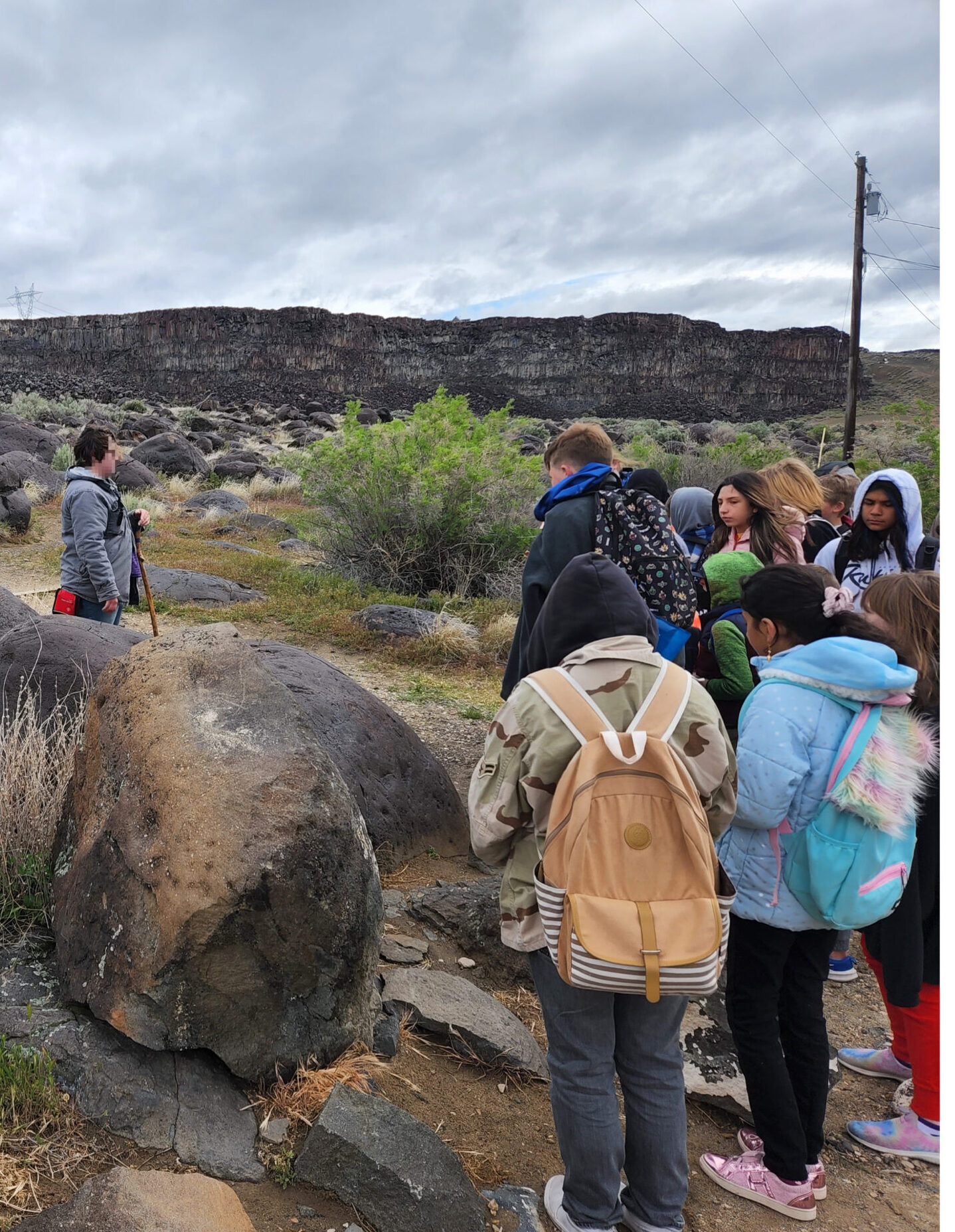
With that question, Enya Granados hooked her Athens, Georgia students. Her classroom buzzed with ideas. Maybe farmers were to blame, or pests were eating the peaches. Throughout the unit, students investigated why peach production had declined by building models, analyzing data, and visiting a local farm. They discovered the real culprit: peach trees aren’t getting enough cool days during the year anymore. Suddenly, Enya’s students weren’t just talking about peaches. They were uncovering how climate change is reshaping their home state.
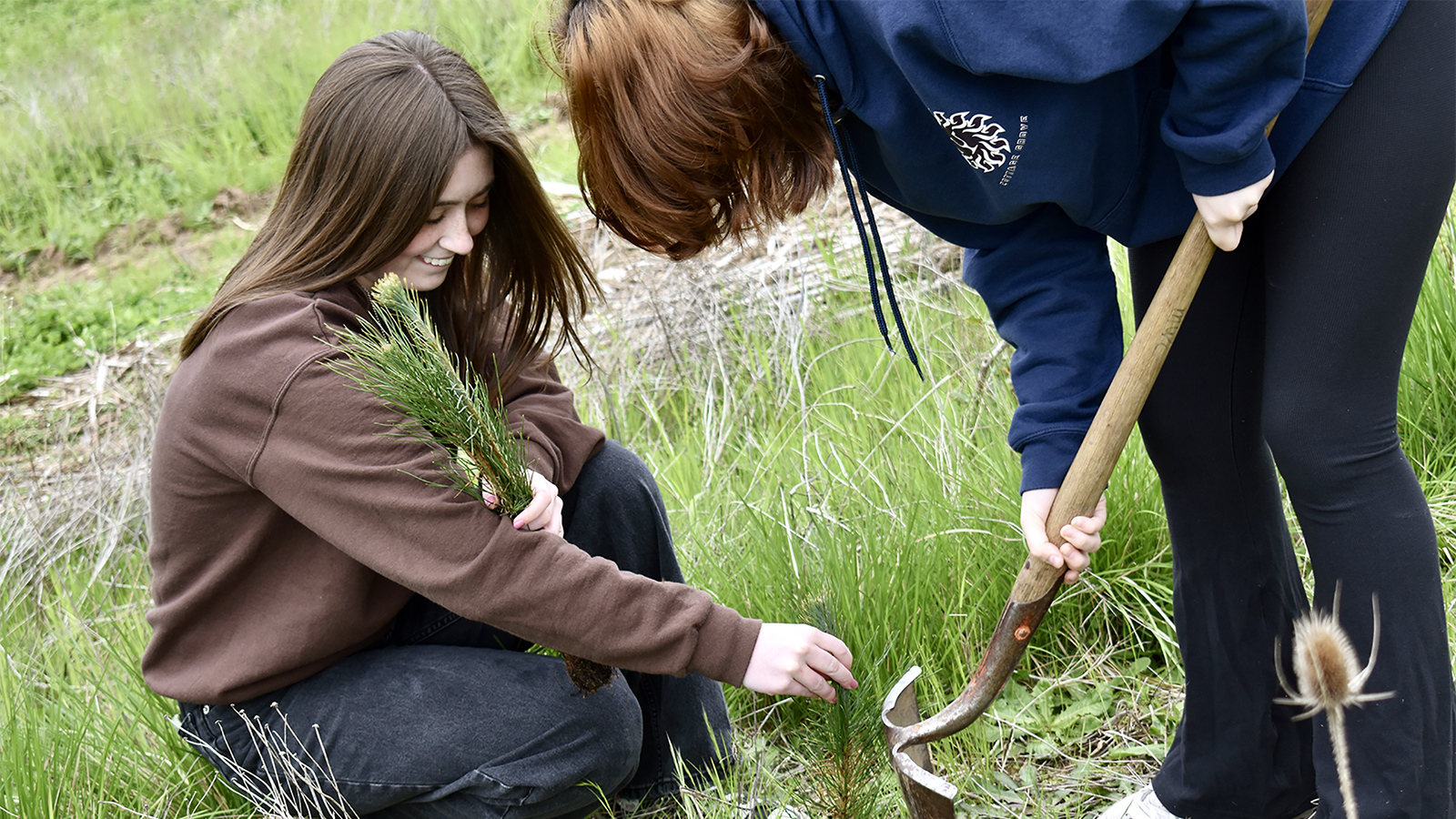
Meanwhile, in rural Oregon, Brian Vollmer-Buhl’s students were outside planting trees on a dreary spring day, unbothered by the weather. They’d learned how planting trees along local waterways strengthens watersheds which, in turn, boost salmon populations that support Orcas in the Puget Sound. Local actions, they discovered, have remote impacts.
Enya and Brian were participants in an NSF-funded project that began with a big question: Does giving space for students to explore locally and culturally relevant climate phenomena, problems and solutions result in increased environmental science agency?
To answer this, BSCS partnered with Oregon Public Broadcasting (OPB) and the National Oceanic and Atmospheric (NOAA) Administration to develop the Climate Education Pathways project, creating curriculum materials from the ground up for teacher adaptation.
The Solutions
-
 Instructional Materials: The Climate Education Pathways project created a storyline climate science unit designed for NGSS and intended for teachers to easily adapt to their community context.
 -
Professional Learning: 60-hours of combined synchronous and asynchronous BSCS-led professional learning utilizing the Anchored Inquiry instructional model to co-develop and customize the instructional materials for their local context.
-
Research study to understand how a relevant, localized unit impacts student learning and agency, as well as teacher content knowledge and confidence.
High Quality Instructional Materials
The Climate Education Pathways team developed a storyline unit that invites teachers to customize part of it to incorporate locally or culturally relevant phenomena and problems that matter to their students and communities. The unit is full of rich visual experiences, simulations, and computer models that incorporate data and the addition of localized data sets.
Professional Learning
Over 60 hours of professional learning, teachers worked with the Climate Pathways team to co-develop climate science units that included fundamentals of climate science and local climate contexts. In Georgia, Enya chose to focus on peaches; in Oregon, Brian chose to focus on Orca Whales. Across 17 states, 25 teachers customized their units to engage thousands of students in reasoning with data to ask and answer questions about global phenomena using local contexts.
Research
BSCS analyzed student pre- and post-assessments and surveys, exit ticket surveys, and teacher implementation surveys to understand how students and teachers perceived the relevance of the localized unit. The research team asked: How do teachers and students perceive the relevance of a localized, phenomenon-driven climate change unit in comparison to teachers’ business-as-usual approach for teaching about climate change? The research explores impacts on students’ climate knowledge and agency, and on teachers’ knowledge and confidence.

The Results
-
 Students whose teachers adapted lessons using local phenomena scored 11% higher on climate science understanding and 5% higher on readiness to apply science learning outside the classroom, compared to students who used the same curriculum without localized adaptations.
 -
Teachers showed significant gains in climate knowledge, confidence for teaching climate change, confidence for phenomenon-driven instruction, and confidence in tapping into local relevance after professional learning and implementation.
Teacher Impact
The Climate Education Pathways project demonstrates that when teachers receive high-quality instructional materials combined with professional learning to adapt materials, they can make global climate science personally relevant and actionable for students. Teachers showed significant gains across contexts — in confidence in teaching climate change, tapping into relevance, phenomenon-driven instruction, and localization after participating in professional learning.
“The climate unit is different from anything I’ve taught in the past 25 years. It’s sensemaking through data and sharing your understanding with another person. The students remain open to listening to each other’s ideas because of the repeated experience of making sense of phenomena together.”
One teacher reflected, “This helped me gain confidence in my ability to continue writing curriculum that is relevant to my students,” and another noted that she now believes, “when students see the relevance to their daily lives, hopefully they will become passionate about change…and hopefully they will see that small changes can make a difference.”
For Brian, this is a breakthrough. After years of trying to build a meaningful climate curriculum, he has finally found an approach that resonates deeply with his rural students. “As a teacher, I strive to build relevance into what I teach,” he shares. “The climate unit is different from anything I’ve taught in the past 25 years. It’s sensemaking through data and sharing your understanding with another person. The students remain open to listening to each other’s ideas because of the repeated experience of making sense of phenomena together.”
Student Impact
Enya’s former student, Adriana, can attest to the connections she’s made from this unit. It’s been two years since she took Enya’s class, and she’s still thinking about climate change in her daily life. “It’s affecting so many things and I notice it everywhere,” Adriana says. “There are a lot of factories in this area and I’ll think about their impact. I’ll smell the factory on the weekend and think, “wow they never take a break!”
Now, when Adriana hears about other problems in the world, she quickly comes to the conclusion that climate change could be a factor. And now she knows she can be part of the solution.
“It shows that when students use solid data, they can bridge differences and reach common ground for the greater good.”
Brian recalls one powerful example when students were asked to identify viable solutions for rebalancing our carbon cycle, “In my class, I have vegetarian students and students who hunt both agreeing that eating less meat is a valid and useful solution in society,” he says. “It shows that when students use solid data, they can bridge differences and reach common ground for the greater good.”
Enya sees similar transformations. While she values the rich classroom discussion, she is mostly inspired by the engagement during assessment. Her students examine multiple data sets and craft thoughtful, evidence-based explanations. “A student would shut down if they were given all of this information out of context,” Enya says. “But they’ve been building on their ideas along the way and can dive in a lot deeper than they would otherwise. I’m so proud that my emerging multilingual learners are producing outstanding written work and making connections.”
Research Results
The research findings confirm that localization matters for both students and teachers. In the quasi-experimental study, students in localized classrooms showed significant gains in climate change knowledge and in their readiness to apply science learning beyond the classroom (Snowden et al., 2025). Teachers showed significant increases in climate content knowledge, confidence for teaching climate change, confidence for phenomenon-driven instruction, and confidence for tapping into local relevance (Mohan et al., 2025). While teachers’ confidence for phenomenon-driven instruction dipped slightly after professional learning, it increased significantly after they enacted the localized unit, suggesting that implementation experience is essential to building instructional confidence. By the end of the unit, students in localized classrooms also reported higher perceptions of relevance compared to those in non-localized instruction (Guy-Gaytán et al., 2025).
What’s Next
The Climate Education Pathways model offers a blueprint for helping students develop both climate understanding and the agency to act on what they’ve learned and is ready for wider adoption. Curriculum and teacher resources are freely available for educators ready to bring localized climate science to their classrooms. To maximize the impact of these materials, educators can partner with BSCS for professional learning services to help schools build long-term capacity.
Resources and References
- Enhance your teachers’ confidence and effectiveness with professional learning services from BSCS.
- Access the curriculum and research at bscs.org/climate/
- Learn more about the Anchored Inquiry instructional model
Connect with a BSCS Program Specialist
Contact Us