At a Glance
District: Jefferson County Public Schools
Location: Louisville, Kentucky
Size:
- District-wide pilot and adoption of OpenSciEd Middle School, a high-quality program based on EdReports Review and pilot results
- BSCS Curriculum-Based Professional Learning (CBPL)
Results:
- Teachers reported improved confidence in leading student-centered, inquiry-based science instruction across all 30 middle schools
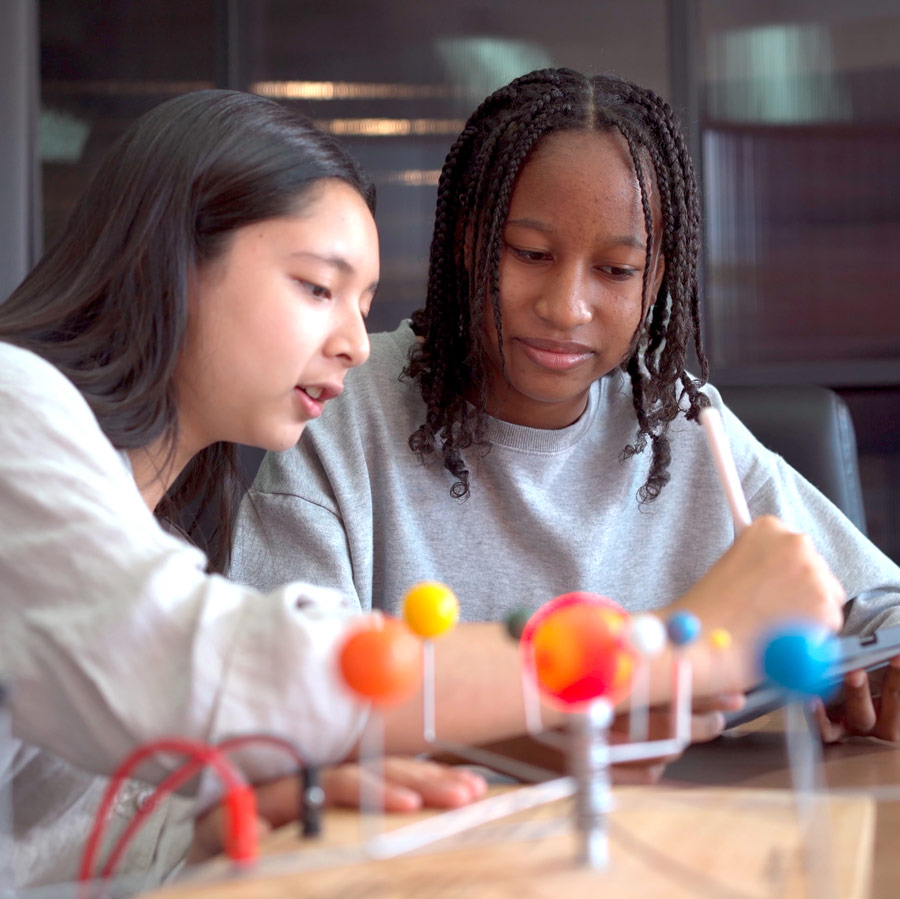
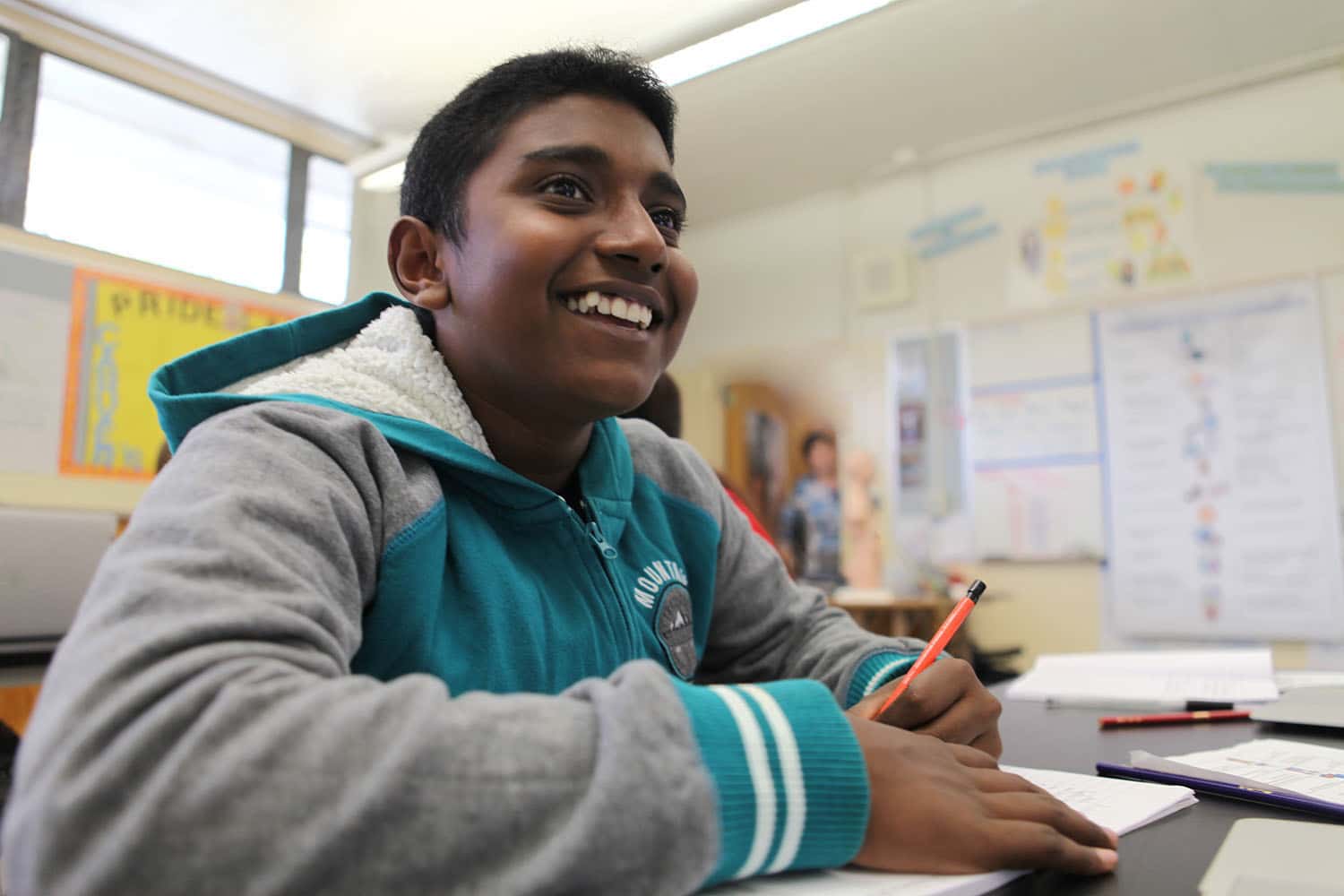
- Students at all performance levels, including English language learners, engaged in collaborative knowledge building and scientific reasoning, taking intellectual risks and constructing their own understanding
Challenges & Needs
-
 Shifting from teacher-led to student-driven science instruction requires a fundamental change in classroom practice that takes time, support, and the right materials.
 -
Teachers needed intensive, sustained professional learning to make that shift real in their classrooms, at a moment when the district had limited capacity to deliver it.
Beginning in fall 2021, JCPS offered teacher leaders the option to pilot OpenSciEd Middle School, a new open-source science curriculum developed by a consortium of science educators and researchers led by BSCS. Many schools opted in, but the timing was challenging. Schools were just emerging from COVID-19, with teachers and students exhausted from months of online learning and morale at a low point.
The challenge was deepened with a district leadership transition at the start of the school year. Brittany Thompson had participated in BSCS’s STeLLA professional learning as a classroom teacher, an experience she says changed her practice. She signed on as an instructional coach, excited to build on that foundation, then quickly found herself stepping into the K-12 Academic Specialist role, responsible for science education across 130 schools.
“Luckily, BSCS and I go way back. Our work together has changed my life. I always have complete confidence that BSCS’s programs will meet our district’s goals. And I knew I could count on the PL team to adjust and adapt the OpenSciEd professional learning as needed given the challenges we were facing.”
– Brittany Thompson, K-12 Academic Specialist
“This was a very challenging time to engage teachers in professional learning…and support them in considering shifts in their practice,” Brittany recalls. “Luckily, BSCS and I go way back. Our work together has changed my life. I always have complete confidence that BSCS’s programs will meet our district’s goals. And I knew I could count on the PL team to adjust and adapt the OpenSciEd professional learning as needed, given the challenges we were facing.”
The Solutions
-
 Leveraged an existing 20-year partnership between BSCS and JCPS, built on trust and shared commitment to improving science education through prior district-level program implementation.
 -
District-wide implementation of OpenSciEd Middle School Science, a comprehensive three-year science program developed by a BSCS-led consortium for three-dimensional, phenomenon-driven teaching and learning.
-
Flexible curriculum-based professional learning approach adapted to meet district challenges, with BSCS making adjustments to take advantage of teacher strengths and accommodate needs.
Brittany’s confidence came from two decades of working together. Since 2006, JCPS and BSCS have built a shared understanding of the district’s context, its teachers, and what meaningful change actually requires. That foundation included a GE grant-funded curriculum, the STeLLA professional learning program for high school biology teachers, and years of collaborative work with school and instructional leadership teams.
In summer 2024, the district formally adopted OpenSciEd Middle School Science. When Brittany explained the challenges the district was facing, BSCS reworked the professional learning approach together by leaning on teacher strengths and cutting what wasn’t essential. To serve teachers at different stages, two pathways were offered: one for experienced OpenSciEd implementers, one for teachers encountering the curriculum for the first time. Teachers who had already been using the materials were eager for the experienced track, they’d seen firsthand how a learner’s lens made them better facilitators.
Throughout 2024, BSCS delivered 84 hours of professional learning across JCPS summer institutes followed by study groups throughout the year. Two hundred teachers participated in CBPL, with ongoing coaching providing classroom-level support so no teacher had to figure it out alone.
The Results
-
 Teachers reported improved confidence in leading student-centered, inquiry-based science instruction.
 -
Students across all performance levels, including multilingual learners, engaged in collaborative knowledge building and scientific reasoning.
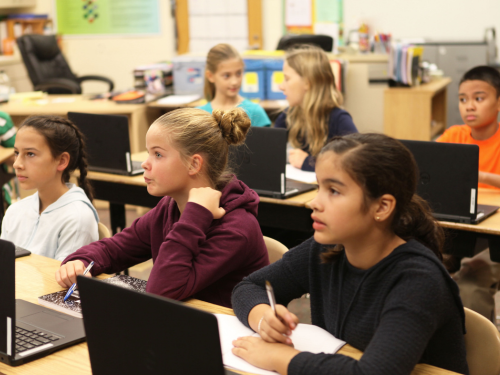
By fall 2024, JCPS’s 30 middle school science classrooms were alive with curiosity and discussion. Over 21,000 students were exploring real-world phenomena and making sense of science on their own terms. Teachers felt confident leading student-centered learning.
The clearest sign of what changed came from a classroom Brittany visited. Mariah Groton’s room, a middle school class with a high number of multilingual learners. Students were leaning over desks, debating predictions, and creating models of how heat moves through materials. They were making connections by drawing on what they’d learned about light reflection in an earlier unit.
In another school, Brittany walked into a light-and-matter unit where students had been given free rein to investigate. Students were explaining to her what they were trying to figure out. One student said: “I don’t have a model for this yet, but let me show you what I made in the last unit.”
Mariah’s growth extended beyond her own classroom. When Brittany was asked to identify teacher-leaders who could facilitate professional learning, Mariah was the first person she thought of. “I want to do the learner lens,” Mariah told her, “because it was so helpful for me.”
By fall 2024, teachers across JCPS’s 30 middle schools reported growing confidence in facilitating student-led, inquiry-based science learning. Students were talking through real problems and working backward from evidence to figure out why things happen the way they do.
For Brittany, the partnership with BSCS has been a constant, from the STeLLA program that first changed how she thought about teaching, to the collaboration that carried her through a district-wide implementation during one of the more demanding periods in her career.
“I am more equipped to do my work because of what I’ve learned working with BSCS in various capacities over the years.”
– Brittany Thompson, K-12 Academic Specialist
Resources and References
OpenSciEd Middle School Science earned “All-green” ratings from EdReports in February 2023, independently validating the quality and usability of the materials teachers were experiencing firsthand.
At a Glance
District: Leander Independent School District
Recognition: Widely recognized at the national, state, and local levels for outstanding academic achievement and standout extracurricular programs.
Location: Leander, Texas, serving parts of the greater Austin area
Size:
- 48 K-12 schools serving over 42,000 students
- 34 high school biology teachers
- 3,400 high school biology students across 8 high schools
Solutions: District-wide adoption of BSCS Biology: Understanding for Life with Curriculum-Based Professional Learning
Results:
- Students engaged from day one, taking risks and building knowledge together across all performance levels
- Growth in confidence for all students, including emerging multilingual learners
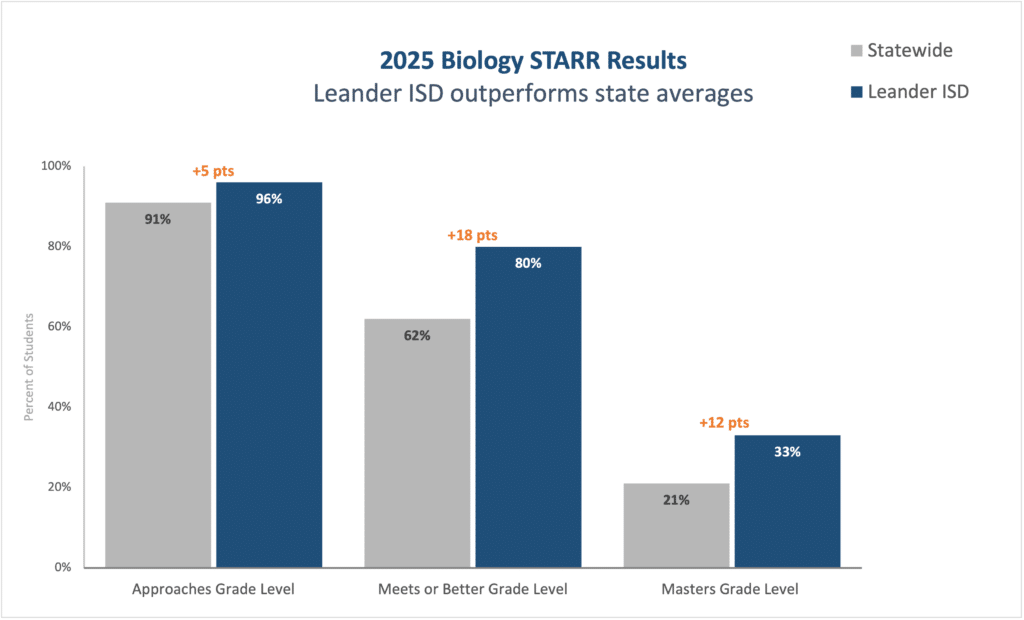
- Leander ISD outperformed state averages on 2025 Biology STAAR by up to 18%

The Challenges
-
Traditional curriculum centered on memorizing isolated facts and providing “correct” answers, leaving little room for real-world application or the kind of scientific thinking that makes learning meaningful.
-
Teachers were filling gaps without external resources. With a program that was built in-house, teachers spent extra time developing their own labs and lessons.
-
Adjustments were needed to implement the NGSS-based BSCS curriculum. Existing materials were aligned to Texas content standards (TEKS), but not designed from the ground up to support the new three-dimensional, phenomenon-driven teaching and learning the new TEKS called for.
-
Teachers were in need of curriculum-based professional learning to support student-driven inquiry.
-
Post-COVID, collaborative classroom culture was difficult to rebuild. The student-centered learning environment that makes science come alive felt increasingly out of reach for both teachers and students.
Justyne Biddle has been teaching life science at Leander ISD for 28 years. Throughout her career, she’s navigated curriculum changes and new state standards. But lately, something felt different.
“I’ve always been good at interacting with kids, laughing and storytelling. But since COVID, getting them to buy in and laugh has been a challenge.” Justyne recalls. “I thought, maybe I’m done.”
She’s not alone. Science teachers across the country are navigating how to engage their students in meaningful ways while implementing robust standards and preparing for standardized testing. For Justyne, the collaborative student-centered classroom culture that had characterized Justyne’s teaching for nearly three decades felt increasingly difficult to establish.
Leander’s existing science curriculum was rich in information but offered few avenues for students to apply thinking to real-world scenarios. This was particularly true for multilingual learners, who benefit most when provided with more interactive, contextualized ways to join the conversation. Although Leander’s educators were ready to embrace a more investigative and social style of learning, the available resources and professional development hadn’t yet caught up to that vision.
The Solutions
-
District-wide adoption of BSCS Biology: Understanding for Life
-
35 hours of Curriculum-Based Professional Learning (CBPL) led by BSCS
-
Anchored Inquiry Learning instructional model
A New Approach to Biology
Leander ISD adopted BSCS Biology: Understanding for Life, a comprehensive biology curriculum designed for the Framework for K12 Science Education and Next Generation Science Standards (NGSS). Unlike materials that have been aligned post creation, BSCS Biology was designed from the ground up, built around three-dimensional learning and phenomenon-driven instruction, reflecting decades of research in science teaching and learning. The curriculum engages high school students in problem-solving, critical-thinking and prepares them for life in our complex, interconnected world.
The curriculum includes four units, each centered around societal challenges important to students, their families, and communities. The program introduces BSCS’s Anchored Inquiry Learning instructional model which focuses on collaborative learning through investigations, providing students increased accountability for self-learning and group work. Students build models, have small group discussions, ask questions, analyze real data, and discover the answer to the “why do I need to know this?” question without having to ask.
Unit 2 covers hereditary-genetic disease and asks students, ”Why are some people at higher risk for heart disease than other people?“ Anna Wydeven, Senior Secondary Science Curriculum Coordinator at Leander ISD, describes a classroom alive with discussion.
“In the classroom, I frequently see students waving their hands, eager to contribute. During the heart disease unit, I saw kids in peer-led groups discussing three levels of health risk. In one group, several boys waited for their student leader to call on them so they could share their ideas. One student in particular took the lesson to heart, linking the health risks to his own family. He used new science words confidently to talk about this serious topic in a safe environment. The level of conversation was remarkably high—it’s amazing to see how much students can do when a curriculum is truly designed to engage teenage minds.”
– Justyne Biddle, Life Sciences Teacher
Justyne adds that this unit becomes real and personal for her students, especially those with family members who have experienced heart attacks, deepening their understanding about genetics and environmental factors.
Professional Learning Makes the Difference
BSCS Biology: Understanding for Life is challenging because it is a new type of program, designed to give students a sense of agency to engage in, figure out, and apply science in meaningful ways beyond the classroom. This requires a non-traditional teaching approach.
Justyne describes the move toward formal storylines as a significant shift in her professional practice. Having spent years crafting her own narratives in existing materials, she initially found it difficult to trust a process she hadn’t authored. “BSCS professional learning puts everything together. It’s been a hard transition. Different pieces I saw in isolation and hadn’t figured out how to meld it all together. Since I wasn’t writing the storyline, I didn’t know where we were going until we were done. Then it all made so much sense.”
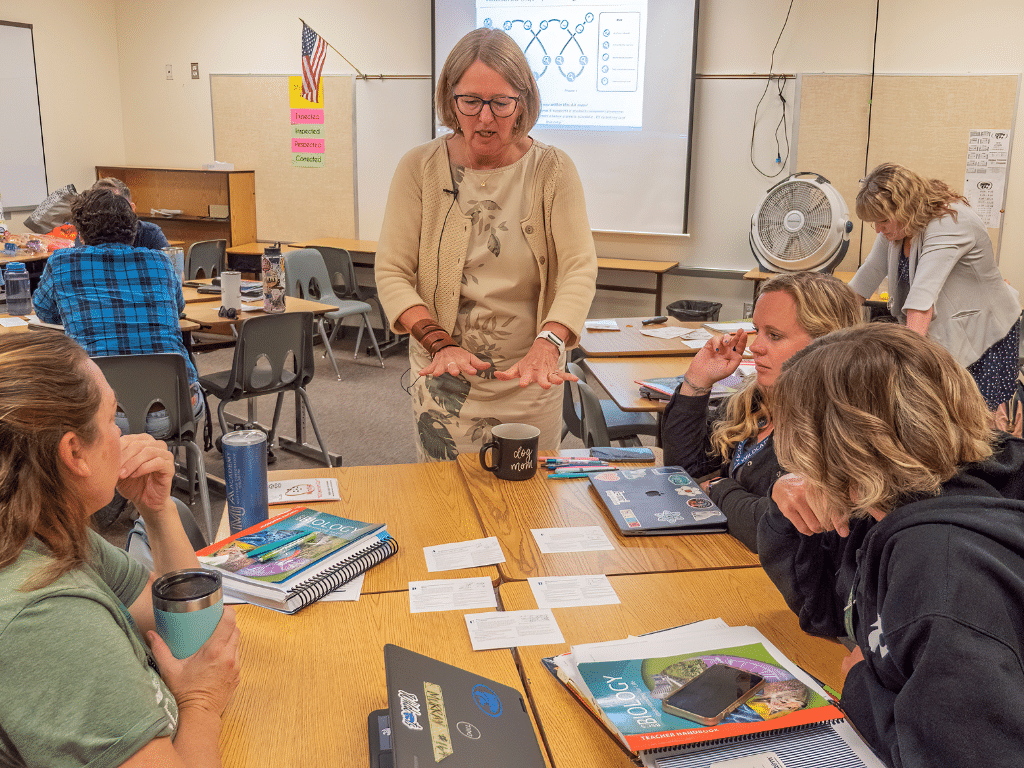
Leander ISD supported teachers with 35 hours of CBPL. BSCS designed Leander’s professional learning program specifically for BSCS Biology: Understanding for Life instructional materials. This matters because even high-quality instructional materials designed for NGSS ask teachers to teach in ways most have not experienced. CBPL makes the shift to student-centered teaching and learning possible by developing an understanding of the Anchored Inquiry Learning instructional model and instructional materials. As teachers dive deeply into the program, their own pedagogical and content knowledge deepens. Teachers are ready to completely change what biology teaching and learning looks like in their classrooms. Justyne walked away feeling excited, confident, and prepared for the year ahead.
District leader, Anna Wydeven, agrees the difference professional learning made for her teachers in Leander was significant. “I’m so glad we used our funding to purchase PL to support the curriculum. The curriculum is powerful, but teachers, my team, and I really needed the CBPL in order to understand deeply how to implement it the way it is meant to be implemented, and to make the program sustainable in the long term. Those two things together are what make the program so powerful.”
The Results
-
Students engaged from day one, taking risks and building knowledge together
-
Growth in confidence for all students, including emerging multilingual learners
-
Outperformed state averages on 2025 Biology STAAR by up to 18%
Transformation in Action
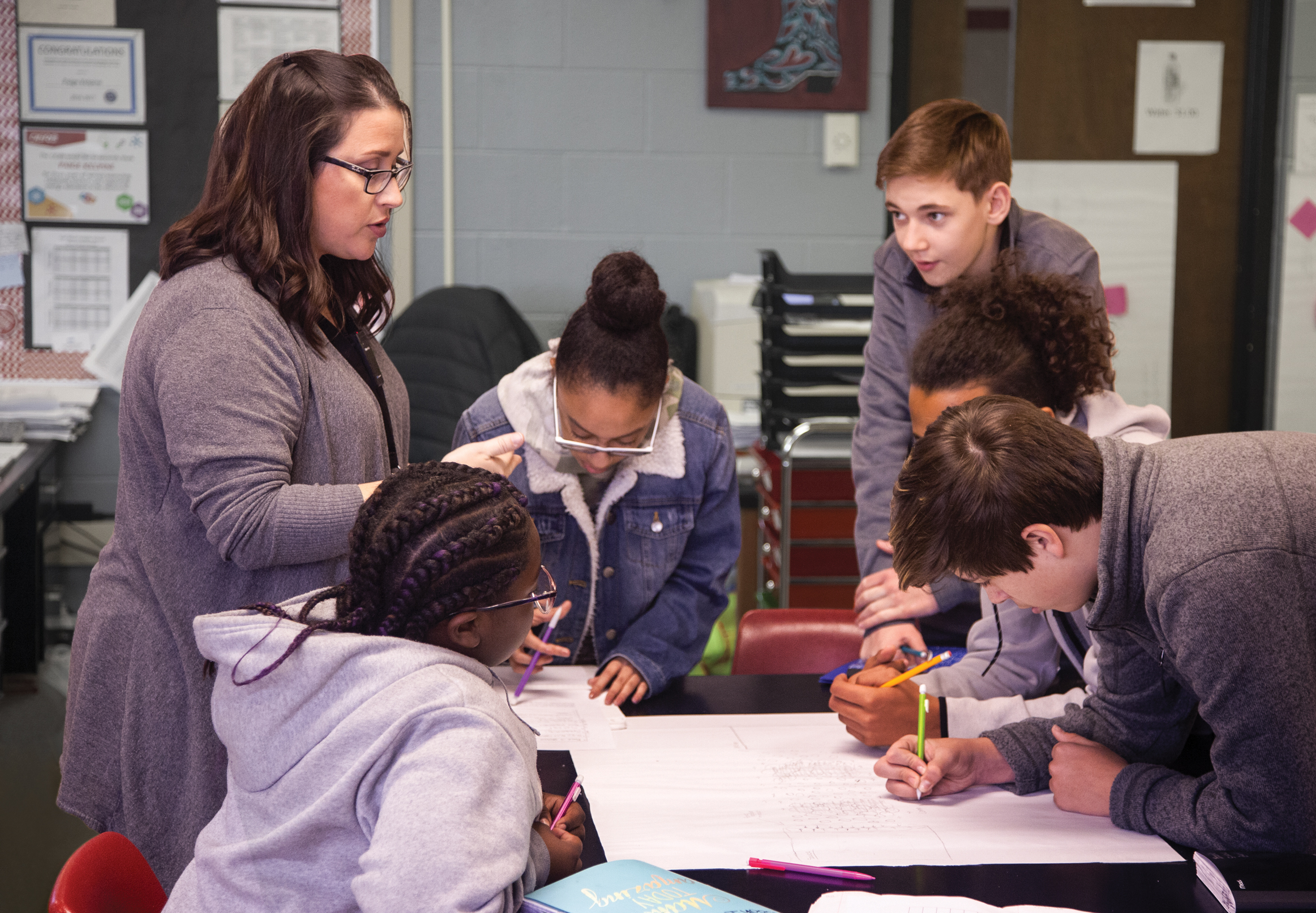
Students engaged from the first day of implementation, with teachers observing students across all performance levels taking risks, sharing ideas, and building knowledge together.
District leaders reported growth not just in science knowledge, but in academic growth and confidence for all students including emerging multilingual learners.
Leander ISD students demonstrated strong performance on the 2025 Biology STAAR exam, outpacing state averages by as much as 18% across all achievement levels. Notably, the Texas Biology STAAR End-of-Course Exam results reflect not just test preparation but instructional transformation.
From the first day of implementation, Justyne saw the difference. Students across all performance levels were taking risks, sharing ideas, and building knowledge together. For emerging multilingual learners, the specifically integrated supports made a crucial difference. These students produced outstanding written work and participated fully in investigations.
Justyne reflects on the classroom transformation, “It’s also made the kids connect with each other again. There’s always been the class where no one ever talks. When I’d ask why, they’d say, ‘I don’t want to be wrong.’ Now, it’s not about giving them the answers, it’s about sharing what they’re thinking. And then saying, ‘Great thought, let’s build on that.’ Very few kids want to hide now. They’re making friends with each other and getting outside of their networks.”
Anna Wydeven shares similar observations, “We’re seeing growth not just in science knowledge, but in confidence for all student groups, including emerging multilingual learners.”
Parents noticed too. “Parents are even thanking me for challenging their kids,” Justyne shares. “They know real life is full of complex problems, and this program is preparing them for it.”
For Justyne personally, the impact was profound. “This program got me back in the game,” Justyne says. “It’s so relevant to kids’ lives. My students are constantly making connections between what they see in the world and what we’re learning in class. Kids were not trying to get answers on their cell phones. They weren’t getting on their laptops. They weren’t doing any of that. They were talking to each other. They were talking to me. I thought, “this feels good.”
Looking Forward
For Justyne, BSCS Biology represented more than a curriculum change, it renewed her sense of purpose. The teacher who had questioned whether to continue teaching found herself energized by a program that equips students with abilities and inclinations to act on what they’ve learned well beyond high school biology class and into their future personal, professional, and civic lives.
“After 28 years of teaching, this program showed me what’s possible,” Justyne reflects. “BSCS Biology changed how my students learn and use science. That’s worth staying in the game for.”
Resources and References
- BSCS Understanding for Life: https://bscs.org/educator_resource/bscs-biology-understanding-for-life/
- https://bscs.org/programs-services/professional-learning-for-bscs-biology-understanding-for-life/
- https://bscs.org/about/anchored-inquiry-learning/
Connect with a BSCS Biology Program Specialist
Contact Us